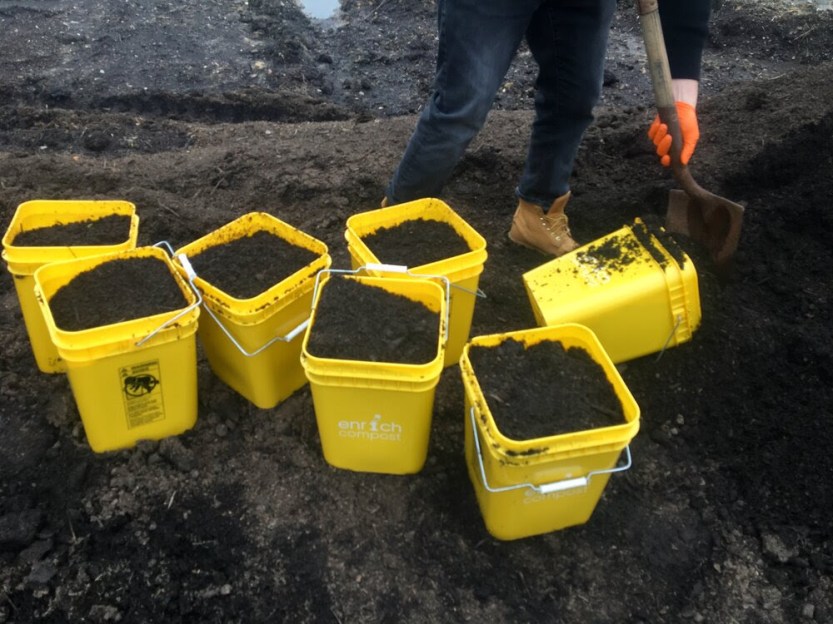
Although not known for being aromatically pleasing, composting is gaining popularity and for good reason. With the pandemic keeping people at home, increasing the number of people buying groceries as opposed to eating out, more households are considering composting as they realize just how much waste is being produced. In 2017, food in U.S. landfills weighed approximately 30,712,000 tons, according to a report from the EPA. Now mind you, that is what was left over after waste was diverted to recycling, composting, and waste-energy recovery. Food still made up the largest portion of waste going to landfills at around 22%. The sad thing is food waste should not be waste at all. It is one of our natural resources and we have been conditioned into throwing it away. Now that composting is back on the radar, we must re-acquaint ourselves with the concept.
Let’s go over the basics. You have most likely heard of composting before. It is the intentional implementation of a natural process. It’s actually super nifty. Plants give us food, but they also break down to create their own ideal environment to grow in. Organic material, such as food and yard waste, breaks down and becomes valuable nutrients for the microbial life in the soil, which is essential for the health of the soil and the plants that grow there. In nature, this is called the plant-soil feedback system. Neat-o, right? It is a closed-loop system found in nature, where nothing goes to waste. Composting is the human application of this natural order which speeds up this process and the finished product is applied to soil from the top down to create a healthy ecosystem for plants to grow in, mimicking the same cycle found in nature for our benefit. I’ll talk more about why we should be composting as a society and why it’s in our own self-interest later, but for now let’s talk about our current options.
Composting has been a long time coming to the U.S., but we all have seen how slow progress can be. Did you know that the city of San Francisco has had a large-scale composting program since 1996? Maybe you weren’t aware that Vermont has been phasing in sustainable waste management practices since 2012 and at the beginning of 2020 made composting the standard across the state. In March of 2019 New York became the sixth state to pass a requirement for commercial producers of organic waste to compost. If you have been paying attention to this progress, then maybe you are like me and you can feel the energy and excitement as composting starts going mainstream. Gone will be the days when composting is considered a hipster hobby or a task only for the environmentally conscious. We, as a society, can finally start to realize the benefits that composting offers. All this activity is extremely exciting, but that’s California, Vermont, and New York. Good for them. What about Virginia? What about Richmond?
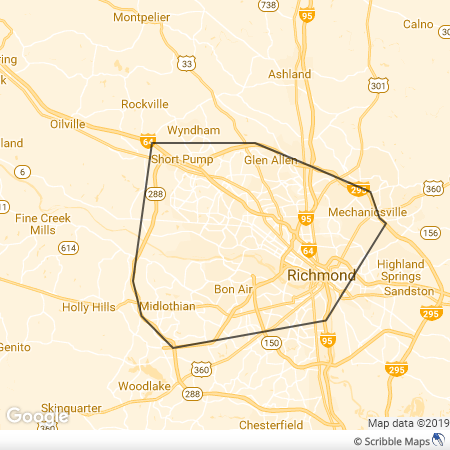
I’ve got exciting news for you. Your city is on the forefront of progress. Did you know this? In the past, composting services have been focused on serving commercial businesses, but in the last three years multiple options for convenient residential compost pick-up have developed in Richmond. On September 28th I was able to speak with the founder of one. Enrich Compost is a company offering residential compost pickup with weekly and bi-weekly options at a monthly rate. They offer group discounts too so if you and 2+ neighbors sign up in the same week, you all get a significantly discounted rate, 40% off! They even service weddings and events. If you own a business, they offer business pick-up as well and will give you a free trial week. Enrich Compost provides the buckets, cheerful 4-gallon yellow containers with lids and the Enrich Compost logo on the side. You may have already noticed them around your neighborhood and if you’ve noticed the buckets, then maybe you’ve also noticed an equally cheerful, somewhat tall individual, driving around in a Subaru picking those buckets up and dropping off new ones. That would be Mx. Kelsey Ryan.
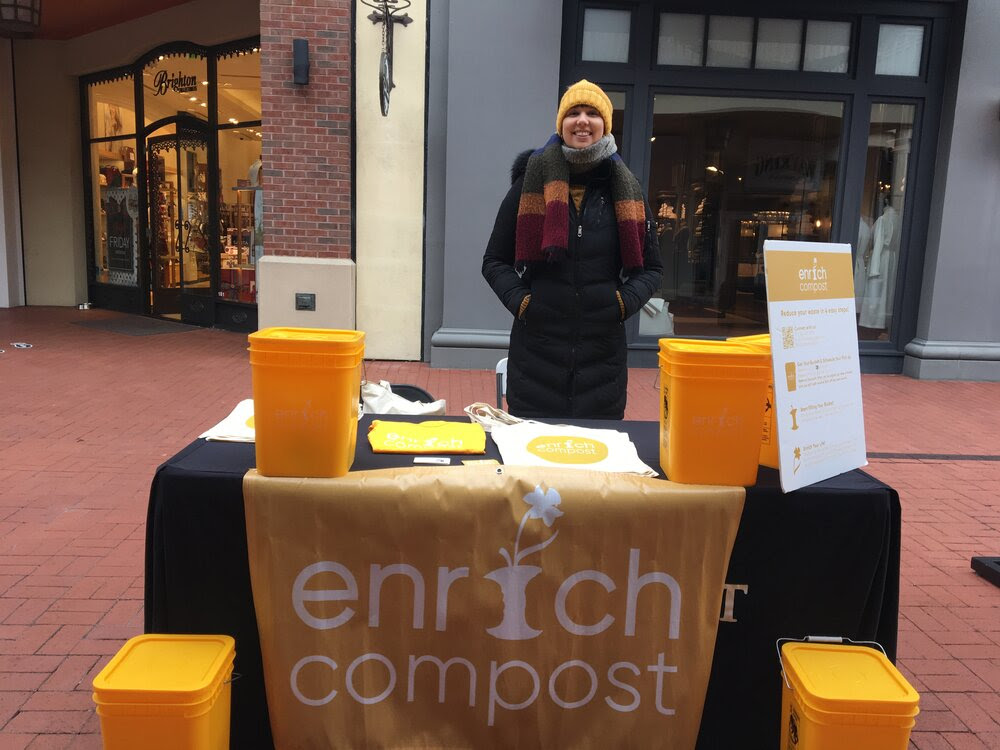
Kelsey entered the Richmond scene with their company, Enrich Compost, in 2018. Inspired by the work and success of a composting company that serviced their college in New York, they knew that they wanted to bring that type of service to whatever area they settled down in. Throughout college Kelsey was involved in environmental groups, fighting for the labeling of GMO’s, and against fracking organizations. Being a key part of the solution to quite a few environmental problems, composting fell naturally into Kelsey’s wheelhouse.
Composting will play a part in reaching several of the U.N. Sustainable Development Goals(SDG’s). Namely goals 2(zero hunger), 11(sustainable cities and communities), 12(responsible consumption and production), 13(climate action), and even finding a connection with goal 15(life on land). The 17 U.N. SDG’s “are the world’s shared plan to end extreme poverty, reduce inequality, and protect the planet by 2030.”, (unfoundation.org). These goals are intended to create a better world for us and its future inhabitants. So, you see this is not just about the environment. You don’t have to have a burning passion for conservation or be involved in environmental rehabilitation or be an avid gardener to want to compost. Wanting to thrive is something we all have in common. No matter what your background is or what lens you view the world through, we each want to thrive. To achieve this, we can start from the ground up. Literally. Our soil is in crisis and we have been wasting a key ingredient by locking it away in landfills where it not only does us no good, but also contributes to our problems. Compost has the ability to restore soil, which increases food production, helps with flood and drought prevention through water retention, and increases carbon sequestration. Now Richmond has the opportunity to be a leader in what the U.N. has dubbed, The Decade of Action, 2021-2030. There are members of the Richmond community that have already answered the call. All that is missing is you.
Kelsey already knew what they wanted their compost company to look like before moving to Richmond. They had the buckets ordered and the Instagram account ready. Kelsey’s connection to Richmond can be traced back to nearly 30 years ago when their mom lived here. Richmond’s vibrant and progressive scene captured Kelsey’s imagination and they decided that this was the place they would start their grand venture. They had the buckets. They had a business plan. And, according to Kelsey, they had a wonderful community to start it all in.
“The community in Richmond has been a really awesome place to start a new business.” -Kelsey Ryan
Kelsey shared with me what drew them to the city of Richmond. It is a city that has a strong local and small business focus. Businesses are more active on social media and the community really comes together on platforms like Instagram to help them thrive, sharing their posts, participating in events, and giving them much needed feedback.
“I’ve never seen businesses use Instagram like this in any other city.” -Kelsey Ryan
At the start, Enrich Compost partnered with Dunreath Farms, a poultry farm that sells non-GMO feed and eggs, located in Ashland, VA. The buckets of spoiled produce were often given to the chickens as a nutritious treat. But as Enrich Compost gained subscribers, the pile of organic waste became too much for the poultry farm to process and Kelsey was on the lookout for a new compost processor.
One evening, while scrolling Facebook Marketplace, they came across someone selling finished compost with beautiful mountains of the stuff.
That is when they found Jesse Stretch of Field Station Farms.
An inquiry led to a two-hour long phone conversation. Kelsey had found their new compost partner. Enrich Compost and Field Station Farms were two pieces of an immense puzzle finally coming together. Kelsey would bring them buckets of nutrient rich organic material, then Jesse and his team would turn that organic material into nutrient rich compost, a feast for the soil and the plants that grow there. Organic material breaks down and feeds the soil. Healthy soil feeds healthy plants. Healthy plants feed healthy people. It really is that simple. Unless you’re a nerd. Then it gets really complicated and mind-blowingly awesome in detail. Really cool stuff that only further proves the point.
Enrich Compost will be kicking off their third year in November 2020. They’d really like to grow their subscriber base in the area currently being serviced before branching outward. Kelsey says about 90% of subscribers are mostly women identifying, in the range of 20-50 years old. Reaching a more diverse demographic is one of the ways that Kelsey would like to see the business grow. If you do find yourself just outside their current range of service, you may be able to entice them by signing up as a neighborhood with groups of 6 or more. More affordable for you, more affordable for the environment. Kelsey is making the rounds in their Subaru and would like to keep this operation as eco-friendly as possible, which means keeping emissions to a minimum with the resources that they have, while maximizing the amount of organic resources being diverted and kept out of the landfills. Gaining a truck or a van would be a much-needed next step as the venture grows. This would enable them to make more pickups with less time on the road, as well as a sturdy frame in which to navigate the rough terrain found on the farm.
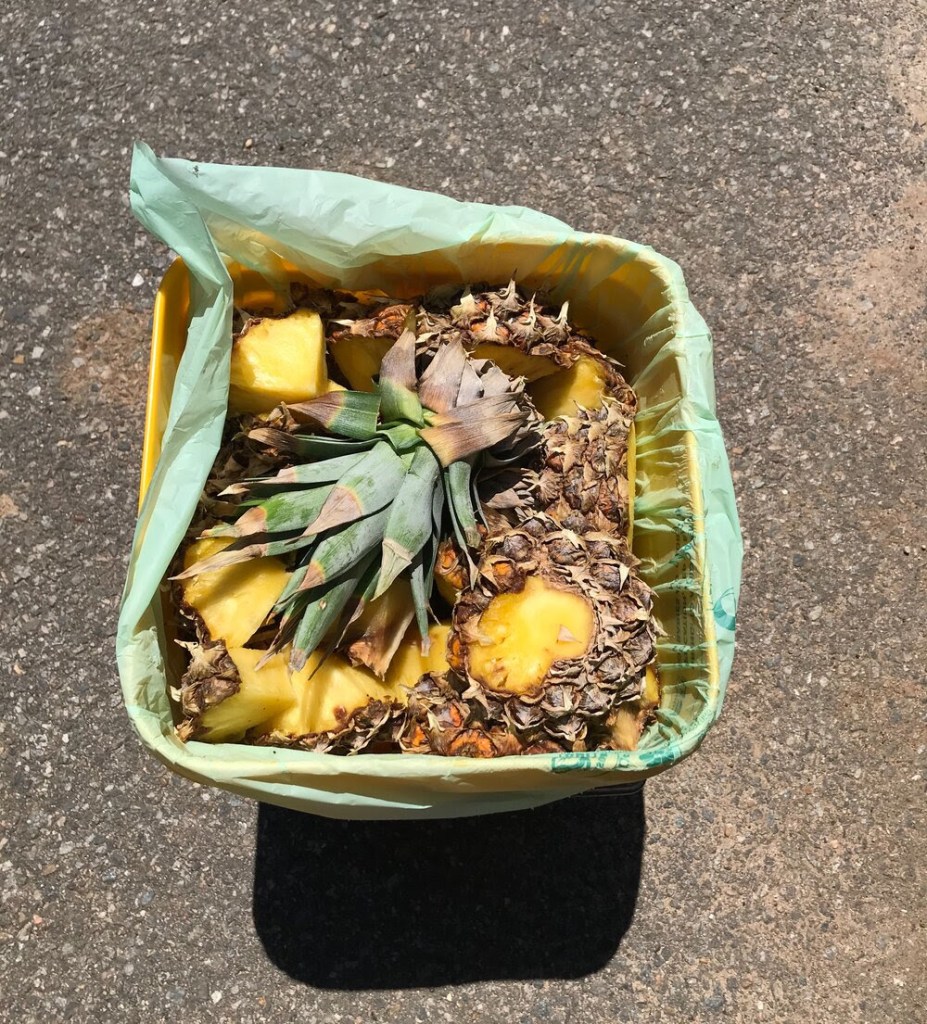
Kelsey would also like to connect more with the community. Getting involved with community gardens is one of the ways they envision doing this. Last year Enrich Compost had a table at the Cary Town Farmers Market and Kelsey found it to be a great experience. They recently hit 200 subscribers and are feeling encouraged that their company is gaining momentum, despite being in a COVID economy. There was no mistaking the pride in Kelsey’s voice while sharing with me how some of their subscribers had reached out and offered to cover the monthly subscription for other households that had lost their jobs due to COVID.
“I almost cried. My members! I love them.” -Kelsey Ryan
Enrich Compost services the hair salon, Parlour RVA. Yes. Hair can be composted. At one point they were also servicing Soul and Vinegar. Their website nicely summarizes who they are, “A small neighborhood food shop offering diverse foods for diverse peoples. Focused on selling healthy, affordable, packaged meals for everyone in the (Church Hill) neighborhood”. Kelsey sounded victorious while explaining that Soul and Vinegar stopped using their services because they had started composting on their own.
“I really don’t mind losing subscribers that way.”-Kelsey Ryan
Kelsey is in this for all the right reasons. They would like to see composting stay local. Each neighborhood would have its own area for composting so that the organic material would not have to travel far. Part of staying local with shopping and services is that you reduce the amount of CO2 emissions that are produced during the transportation phase.
Talking about the future of composting, ideally the City of Richmond would take over the service and offer it alongside recycling. Obstacles to seeing this become the reality are, Richmond currently lacks the necessary infrastructure and education of the general public. Bruno Welsh, of Compost RVA, and groups like the Sustainable RVA: Zero Waste Initiative have been working on that front since 2014. A big part of public education will be raising awareness of the problems that our current waste management practices impose on the community as well as education about the solutions, their advantages, and basic understanding of composting such as what is compostable and what is not. A catalyst to raising awareness and spreading knowledge of composting practices will be having key business leaders in the community adopt the practice and supporting the small business compost services that are being offered right now. Then also taking that next step and applying that same practice at home and in their own neighborhoods.
As someone who maybe doesn’t have the space to compost or the financial ability to subscribe to a service, there are other ways you can help bring this common-sense practice of not wasting our natural resources to the City of Richmond. Ken Bannister, president of the Virginia Composting Council and senior geologist at Draper Aden Associates, gave me this as a starting point:
- Get involved. Members of the public are welcome to join the meetings of the Virginia Composting Council. You can follow them on Facebook or you can join their email list, which often comes with excellent educational resources such as newly published studies like this one.
- Keep up with local politics. Support legislation that diverts food and other organic waste from landfills. Contact your local legislator and ask for this legislation. (The VCC is currently working with the Virginia Conservation Network on possible compost legislation for Virginia.)
- Understand your local waste stream. (Honestly, I haven’t been able to find a good resource for this. Maybe that’s another thing that needs to be done, a comprehensive analysis of Richmond’s current waste stream.)
- Work with local public and private groups to help build public support for these services. Groups like Enrich Compost and Compost RVA!
“The world as we have created it is a process of our thinking. It cannot be changed without changing our thinking.”
Albert Einstein
Every day we vote with our choices. Vote for a better future and choose to support your local composting efforts. Not everyone has that option. Lucky for us, Richmond is filled with go-getters that are making it happen. The future is bright.
Check out my resources page to find all the sources I used in this article, including contact info for your local legislators and some quick facts and figures.
Visit Enrichcompost.com and use code ARENA for 50% off your first month. It’s a monthly subscription so if it doesn’t work for you, you’re able to cancel the service with no strings attached.
“Change will not come if we wait for some other person, or if we wait for some other time. We are the ones we’ve been waiting for. We are the change that we seek.”
Barack obama, feb. 5 speech, 2008
 The Arena Perspective: Richmond, VA